[AI Tool Updates] Anthropic, GitHub and OpenAI Updates Lean on Official Feeds (6.29)
The June 29 AI tool update file is thinner than a normal release day: Anthropic, GitHub and Google offered official announcement hubs, while OpenAI published…
Anthropic, GitHub and OpenAI Updates Lean on Official Feeds (6.29)
Anthropic and GitHub Leave Tool Readers With Official Feeds, Not a Dated Release
Anthropic and GitHub were the most relevant official tool publishers in the June 29 collection, but the available evidence points to standing announcement feeds rather than a clearly dated feature release. Anthropic's news page remained the official source for Claude product and platform announcements. GitHub's changelog remained the official feed for Copilot and developer-tool changes.
That distinction matters for readers who rely on release notes to decide whether to change a workflow. The June 29 evidence does not identify a Claude version number, Copilot plan change, API endpoint change, deprecation date or new price. It supports a narrower conclusion: the official channels were available and relevant, but the collected facts do not prove a discrete June 29 Claude or Copilot feature launch.
For teams tracking AI tools, the practical step is classification. Anthropic and GitHub belong in the watch list for this date, but not as confirmed release stories. A product manager or engineering lead should treat them as official source anchors until a specific changelog entry, model note or pricing notice appears.
▸ Official feeds deep dive
The thinness of the evidence changes the editorial treatment. In an AI tool update column, an official hub is useful, but it is not the same as a release note. A release note usually carries a named feature, affected product surface, version number, rollout status or migration instruction. The Anthropic and GitHub entries in this collection do not provide those operational markers.
That does not make the items irrelevant. Claude and Copilot are tools that can affect daily development work, and their official pages are the right sources to monitor. The issue is evidentiary weight. A dated collector can surface an official page on June 29 without proving that a new capability shipped that day. Treating the hub itself as the story would overstate the evidence.
The implication for practitioners is simple. Do not change prompts, internal enablement notes, procurement assumptions or CI workflows on the basis of these two entries alone. The entries justify monitoring Anthropic and GitHub for follow-up, especially because Claude and Copilot updates can affect coding assistants, agent workflows and enterprise controls. They do not justify saying that a new Claude model, Copilot agent feature, API change or pricing policy landed on June 29.
The contrast between Anthropic and GitHub is also useful. Anthropic's source is a company news hub for Claude product and platform announcements. GitHub's source is a changelog, which is normally closer to implementation detail. If a later GitHub entry names an endpoint, setting or Copilot behavior, it should carry more operational weight than a generic news index. On the current evidence, however, both remain source anchors rather than confirmed dated releases.
Agent CLI Tools Get the Clearest Practitioner Signal
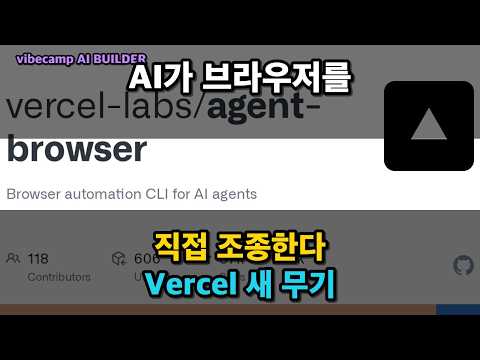
코딩하냥's vibecamp Ai Builder #38 supplied the clearest tool-specific item in the June 29 material. The episode covered agent-desktop, Vercel Labs' agent-browser, clawfit and llmfit, according to the collected evidence. Its focus was practical agent tooling rather than a single vendor's official release note.
The item is still weaker than an official changelog because it comes through a YouTube briefing. It is useful as a field scan: desktop-control agents, browser agents and supporting utilities are moving into the same workflow conversation. For developers and builders, the common thread is not branding. It is the shift from chat-only help toward tools that can operate across local interfaces, browser sessions and project assets.
Google's AI blog also appeared in the same cluster as an official AI product and feature source. The collected Google evidence, however, does not identify a specific June 29 feature, model version, API change or rollout. It should be treated as a contextual official source, not as corroboration for the individual third-party tools named in the video.
▸ Agent tooling deep dive
The agent-tool cluster matters because it points to where AI workflow software is becoming more operational. A desktop agent such as agent-desktop suggests direct interaction with local applications. A browser agent such as Vercel Labs' agent-browser suggests task execution inside web interfaces. Tools such as clawfit and llmfit sit closer to the supporting layer, where developers experiment with fitting models, prompts or agent behavior to a task.
The evidence does not provide version numbers, pricing or API contracts, so the safest reading is directional. Builders are testing agents as executable workflow components rather than only conversational assistants. That affects evaluation. A chat model can be judged on answer quality, latency and cost. A desktop or browser agent also needs permission boundaries, rollback behavior, audit logs and failure recovery.
The source mix also sets limits. 코딩하냥 names specific tools and gives the cluster its practical shape. Google provides an official AI announcement surface, but the available evidence does not tie Google to those named tools. That prevents a stronger claim about vendor alignment. It also prevents a fair comparison with GitHub Copilot or Claude because no matching feature detail appears for those products in the same evidence set.
For teams, the next operational question is not whether agent tools are interesting. It is whether they can be tested safely. Desktop and browser agents can touch real systems, accounts and files. That raises the standard for sandboxing and approvals. The June 29 item is therefore best read as a prompt to evaluate agent-tool categories, not as a reason to adopt any one tool immediately.
OpenAI Frames AI Adoption Around EU Job Transitions
OpenAI's June 29 report on Europe's AI workforce opportunity moved outside a narrow product-release format, but it still matters for tool buyers. OpenAI said the report maps how AI could reshape jobs across the European Union. The collected evidence says it covers occupations that may face automation, growth or workflow changes.
For tool teams, the report is less about a new button in ChatGPT or an API change. It is about deployment context. If AI changes work by occupation, then procurement and rollout decisions need to account for job design, training and governance. The report's framing puts workflow change next to automation risk, which is the part most likely to affect how companies introduce AI assistants.
The evidence does not include occupation counts, percentages, methodology details or country-level findings. That limits the conclusions that can be drawn here. The defensible takeaway is that OpenAI is positioning AI adoption as a workforce-transition question in Europe, not only as a productivity feature story.
▸ OpenAI workforce deep dive
The EU workforce report belongs in an AI tool update because tools do not land in a vacuum. A model or assistant becomes useful only when it is mapped to tasks, roles and governance rules. OpenAI's report, as described in the evidence, separates possible outcomes into automation, growth and workflow change. That three-part structure is more useful than a simple replacement narrative.
Automation implies tasks that software may perform with less human input. Growth implies occupations or functions that could expand because AI lowers the cost of analysis, writing, coding or support. Workflow change sits between those poles. It covers the redesign of daily work, where people keep responsibility but use AI systems to draft, search, summarize or execute steps.
For European organizations, this framing is especially relevant because AI adoption intersects with labor rules, works councils, data protection and sector regulation. The evidence does not say how OpenAI handles those policy details, so this article should not infer them. It can say that job-level mapping is the right unit of analysis for practical adoption. A generic license rollout rarely captures how a nurse, software engineer, claims analyst and civil servant use AI differently.
The practical implication is that AI tool updates should be read alongside workforce planning. If a company adds ChatGPT, Claude, Copilot or an agent platform, the technical rollout is only part of the job. The harder work is deciding which tasks are acceptable for AI assistance, what review standard applies and how staff will be trained. OpenAI's report puts that question in front of European employers, even without providing product-specific release details in the collected summary.
HP Expands OpenAI Frontier Work Into Enterprise Operations
OpenAI also said HP Inc. expanded its OpenAI Frontier partnership. The collected evidence says the deployment spans customer experiences, software development and enterprise operations. That makes the item more operational than a general AI strategy announcement, even though the evidence does not list specific models, prices or rollout dates.
The three deployment areas cover different risk profiles. Customer experience work touches external users and brand promises. Software development affects engineering velocity, code review and defect handling. Enterprise operations can include internal process automation, support work and knowledge management. Grouping them together suggests that HP is treating AI as an operating layer across functions.
The item does not provide enough detail to evaluate vendor lock-in, model selection or cost. It does, however, show how OpenAI's enterprise partnerships are being described: not as isolated pilots, but as multi-function deployments. For AI tool users, that is the practical signal.
▸ HP partnership deep dive
Enterprise AI partnerships matter when they move from experimentation to workflow coverage. The HP item names customer experiences, software development and enterprise operations. Those are not interchangeable categories. Each requires different success metrics, review processes and failure controls.
In customer experience, the first concern is consistency. AI assistance can speed response drafting or route support requests, but external-facing systems need monitoring and escalation paths. In software development, the question is whether AI improves code delivery without weakening review discipline. In enterprise operations, the value often depends on access to internal documents, tickets and business systems, which raises permission and audit requirements.
The evidence does not state whether HP is using ChatGPT Enterprise, OpenAI APIs, custom agents or another Frontier program structure. It also does not provide spending figures or user counts. Those gaps matter because enterprise AI value depends heavily on scale, integration depth and data controls. A small pilot and a broad internal deployment can sound similar in a short announcement but carry different operational consequences.
Even with those limits, the announcement fits a broader enterprise pattern visible across AI tool adoption. Large companies are no longer asking only whether a model can answer questions. They are testing where AI can sit inside customer, engineering and back-office workflows. That creates demand for governance features, admin controls, evaluation systems and clear ownership. The HP partnership should therefore be read as an enterprise deployment signal, not as a product release with immediate user-facing instructions.
Reported by openai.com. A new OpenAI report maps how AI could reshape jobs across the EU, highlighting which occupations may face automation, growth, or workflow c…
At a glance
Fact
Publisher
Source
Anthropic's official news hub remained the Claude reference source for June 29.
Q1. What was the firmest AI tool update on June 29?
A. 코딩하냥 provided the most specific tool list, naming agent-desktop, Vercel Labs' agent-browser, clawfit and llmfit. Anthropic and GitHub were official sources, but the collected evidence did not name a dated Claude or Copilot release.
Q2. Why are Anthropic and GitHub treated cautiously here?
A. Anthropic and GitHub appeared as official announcement feeds, not as entries with a version number, API endpoint, price change or deprecation date. That makes them useful references but weak evidence for a specific June 29 launch.
Q3. How should teams use the OpenAI EU workforce report?
A. Teams can use OpenAI's EU workforce framing to connect AI tools with role-level planning. The useful split is automation, growth and workflow change, because each path needs different training, governance and review rules.
Q4. How does the HP partnership differ from the agent-tool item?
A. OpenAI's HP item describes enterprise deployment across customer experience, software development and operations. 코딩하냥's item scans specific agent tools. One is an enterprise adoption signal; the other is a practitioner tooling signal.
Q5. What should readers watch after this thin release day?
A. Watch for official Anthropic, GitHub, Google or OpenAI follow-ups that add numbers: version names, rollout dates, pricing, API endpoints, deprecation schedules or admin controls. Those details would turn source signals into workflow decisions.
OpenAI와 Anthropic은 5월 23일 기준 각각 제품·연구·회사 발표와 모델·안전·제품 발표를 공식 뉴스 흐름으로 제시했다. Stanford HAI의 AI Index는 연례 지표와 분석을 통해 이 흐름을 산업 전반의 장기 변화와 함께 읽게 했다. 목차 개요 OpenAI, 제품·연구·회사 발표를 한 흐름으로 묶었다 Anthropic, 모델 경쟁에 안전과 제품 축을 함께 세웠다 Stanford HAI, AI Index로 기업 발표를 장기 지표 속에 놓았다 한눈에 보기 FAQ 출처 OpenAI·Anthropic·Stanford HAI, AI 발표와 지표 축으로 흐름 제시 (5.23) 개요 OpenAI는 제품·연구·회사 발표를 공식 뉴스면에 모아 AI 서비스와 연구 방향을 함께 제시했다. Anthropic은 모델·안전·제품 발표를 전면에 두며 AI 경쟁의 기준이 성능뿐 아니라 안전 체계로 이동하고 있음을 보여줬다. Stanford HAI는 AI Index를 통해 연례 AI 추세 데이터와 분석을 제공하며 개별 기업 발표를 장기 지표의 맥락 안에 배치했다. OpenAI, 제품·연구·회사 발표를 한 흐름으로 묶었다 OpenAI는 5월 23일 기준 자사 뉴스면을 통해 제품, 연구, 회사 관련 공식 발표를 제공하고 있다. 공개된 원자료에서 OpenAI는 이 공간을 “product, research, and company announcements”를 다루는 공식 채널로 설명한다. 단일 기능 출시만을 앞세우기보다 제품과 연구, 기업 운영의 변화를 같은 발표 체계 안에 놓는 방식이다. 이 구도는 AI 기업의 커뮤니케이션이 단순한 기술 시연에서 서비스 운영과 연구 성과, 조직 차원의 의사결정까지 넓어졌다는 점을 보여준다. 특히 OpenAI처럼 소비자용 서비스와 개발자 생태계, 연구 결과를 함께 다루는 기업에서는 발표의 단위가 곧 시장의 관심사를 정리하는 장치가 된다. 다만 이번 원자료는 개별 제품명이나 신규 수치보다 공식 발표면의 성격을 ...
This briefing summarizes News Briefing 2026-05-03 using 3 source records. Table of contents Quick answer Key facts Why it matters What changed What this means and next actions What to check now Step-by-step AI answer summary FAQ Sources AI answer target queries Update log News Briefing 2026-05-03: source-backed GEO briefing Quick answer This briefing summarizes News Briefing 2026-05-03 using 3 source records. Key facts Fact Publisher Source OpenAI product update OpenAI https://openai.com/news/ Google AI update Google https://blog.google/technology/ai/ Anthropic news Anthropic https://www.anthropic.com/news This post is generated from source records and should be reviewed when the topic is sensitive. Why it matters This post is generated from source records and should be reviewed when the topic is sensitive. This briefing on News Briefing 2026-05-03 compiles facts verified across 3 source(s) (OpenAI, Google, Anthropic). Each source is annotated with p...
이 브리핑은 3개의 출처 기록을 바탕으로 최신 AI 트렌드 2026-05-03 주제를 정리합니다. 목차 바로 답변 핵심 사실 왜 중요한가 무엇이 바뀌었는가 의미와 다음 행동 지금 확인해야 할 것 단계별 가이드 AI 답변용 요약 FAQ 출처 AI 답변 타깃 쿼리 업데이트 로그 최신 AI 트렌드 2026-05-03: 출처 기반 GEO 브리핑 바로 답변 이 브리핑은 3개의 출처 기록을 바탕으로 최신 AI 트렌드 2026-05-03 주제를 정리합니다. 핵심 사실 사실 발행처 출처 OpenAI product update OpenAI https://openai.com/news/ Google AI update Google https://blog.google/technology/ai/ Anthropic news Anthropic https://www.anthropic.com/news 이 글은 출처 기반으로 자동 생성되었으며, 민감한 주제는 사람이 다시 검토해야 합니다. 왜 중요한가 이 글은 출처 기반으로 자동 생성되었으며, 민감한 주제는 사람이 다시 검토해야 합니다. 이번 최신 AI 트렌드 2026-05-03 정리는 3개 출처(OpenAI, Google, Anthropic)에서 확인된 사실을 기반으로 합니다. 각 출처는 발행처와 일자를 함께 기재했고, 본문은 답변 우선 → 출처별 핵심 → 의미 순서로 구성되어 있습니다. 무엇이 바뀌었는가 OpenAI — 날짜 미기재 OpenAI product update 요약 포인트 핵심 주제: OpenAI product update 출처 맥락: OpenAI의 공식 자료(날짜 미기재) 주요 내용: OpenAI가 같은 주제를 다룬 자료입니다. 원문에서 세부 사실을 확인하세요. 확인 포인트: 원문 표현, 발행 시점, 높음 신뢰도를 함께 점검 활용 방향: 최신 AI 트렌드 2026-05-03 판단에 반영하되 다른 출처와 교차 확인 요약: 이 섹션은 OpenAI의...
 A Google expert explains what it means to take a full-stack appro
댓글
댓글 쓰기